
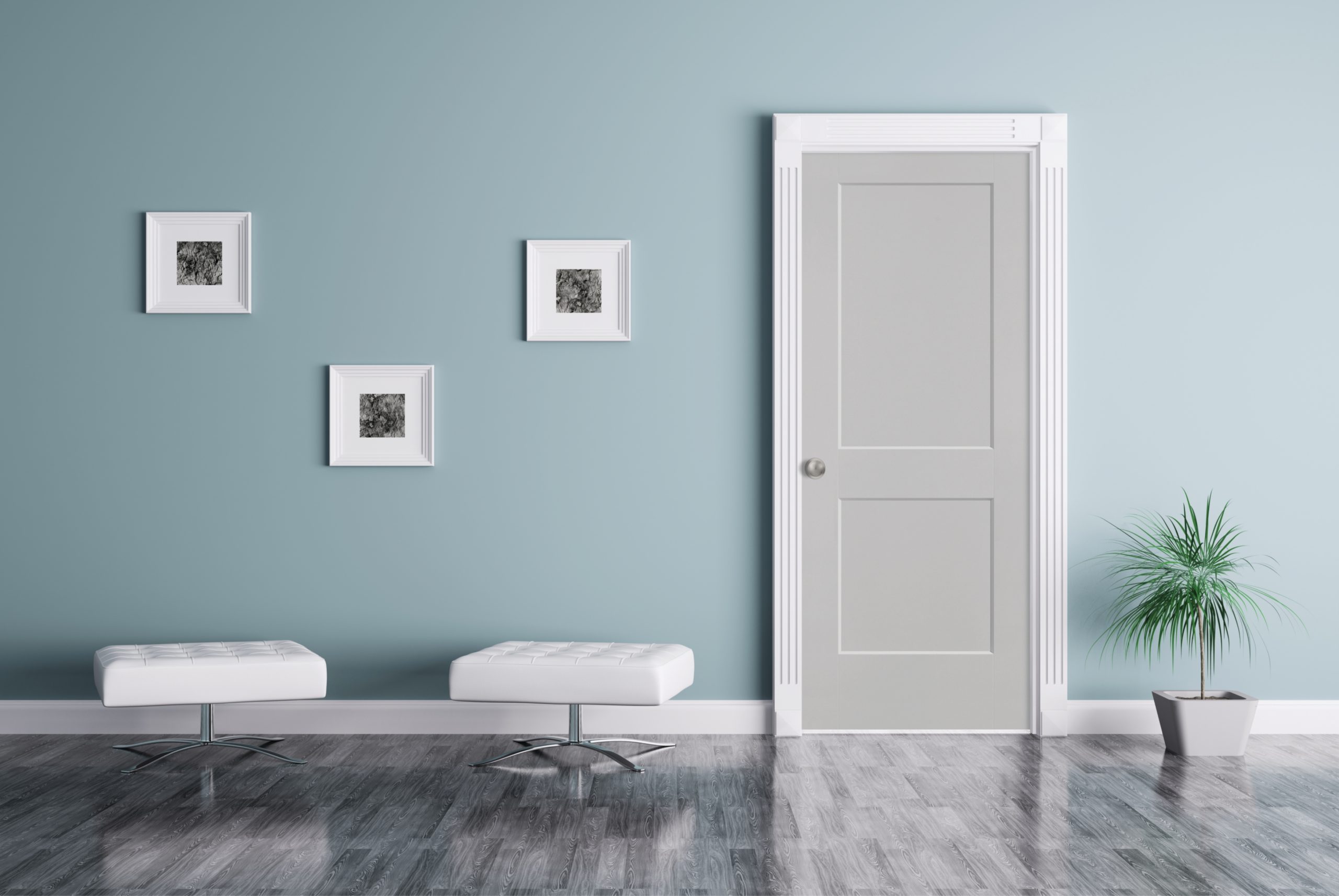
A combination of smaller footprints, rising privacy needs, price pressures and the push toward warmer, more expressive interiors is reshaping door choices this year.
For years, interior doors have moved from being background elements to becoming fully functional architecture, shaping how rooms feel, how sound travels and how homeowners use their spaces. This is truer now than ever, as doors and other millwork tie together a room’s overall look and feel.
“Designers are increasingly viewing doors, trim, and wall details as a single architectural system rather than separate elements,” says Nicole Rocheleau, Vice-President of Marketing at Metrie. “Consistent profile language, coordinated panel details, and unified paint colours help create a cleaner, more intentional look, especially in modern and transitional homes.”
She continues, “The goal is less visual interruption and greater design continuity throughout the space.”
But today’s homeowners and condo buyers care deeply about privacy, durability, space efficiency and the stylistic warmth of their doors. “More people’s spending goes on doors than ever before. People are looking for the door to do more than just fill a hole,” says Lauren Sabeski, Director of Sales at Alliance Door. “We’re actually seeing consumers ask for more functionality from their doors.”
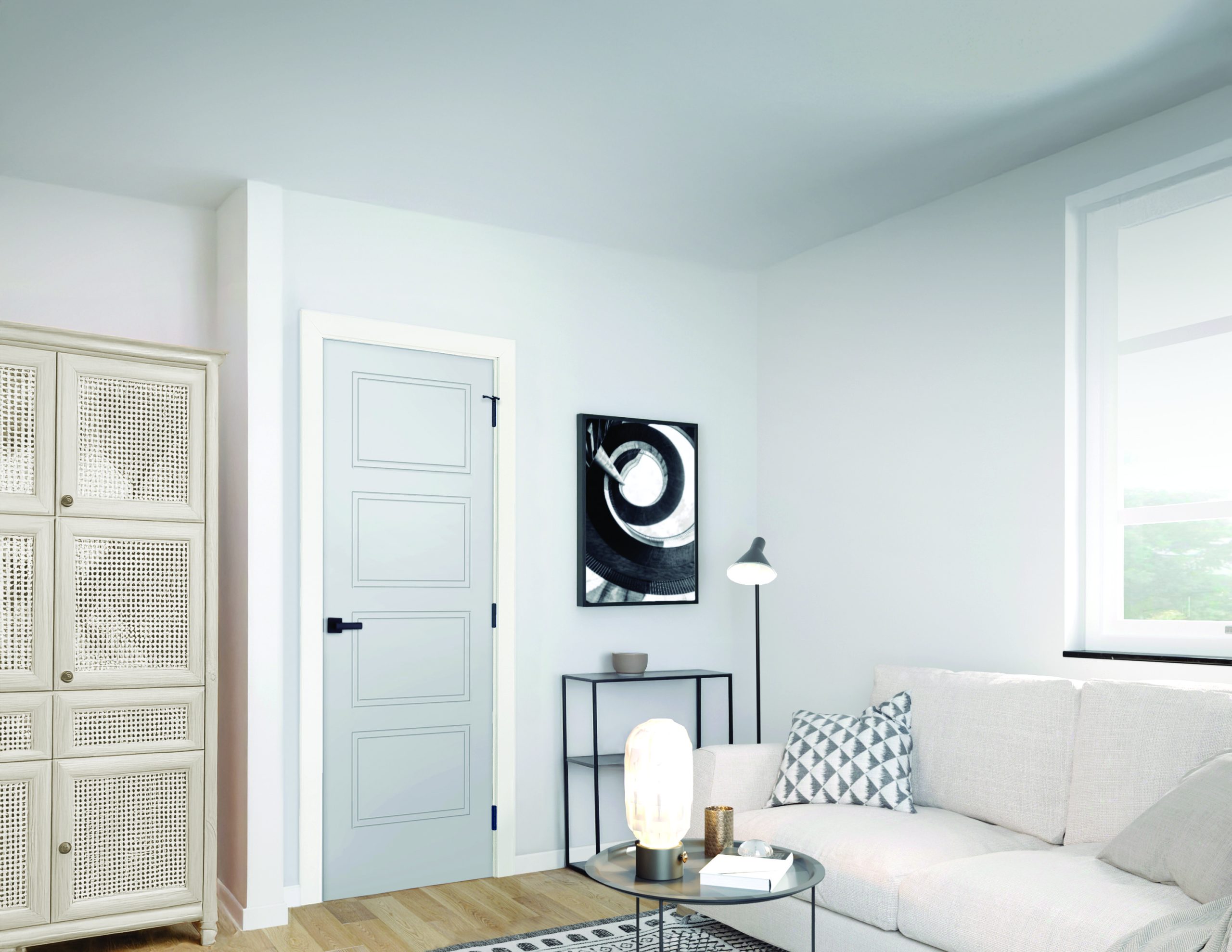
Photo courtesy of Alliance Door
Solid Demand for Solid Core
One such functional element continues to be driven by a need for privacy. With the continued prevalence of home-based and hybrid work, along with the increase in multi-dweller units, sound attenuation has become paramount.
Homeowners are increasingly choosing solid core interior doors for their ability to block sound, but also for their durability and weight. For many, a solid core door simply feels right in their hands.
“Consumers want solid core because it helps with sound transmission, enhances the durability, and it has the feel of a true wood door,” Sabeski says.
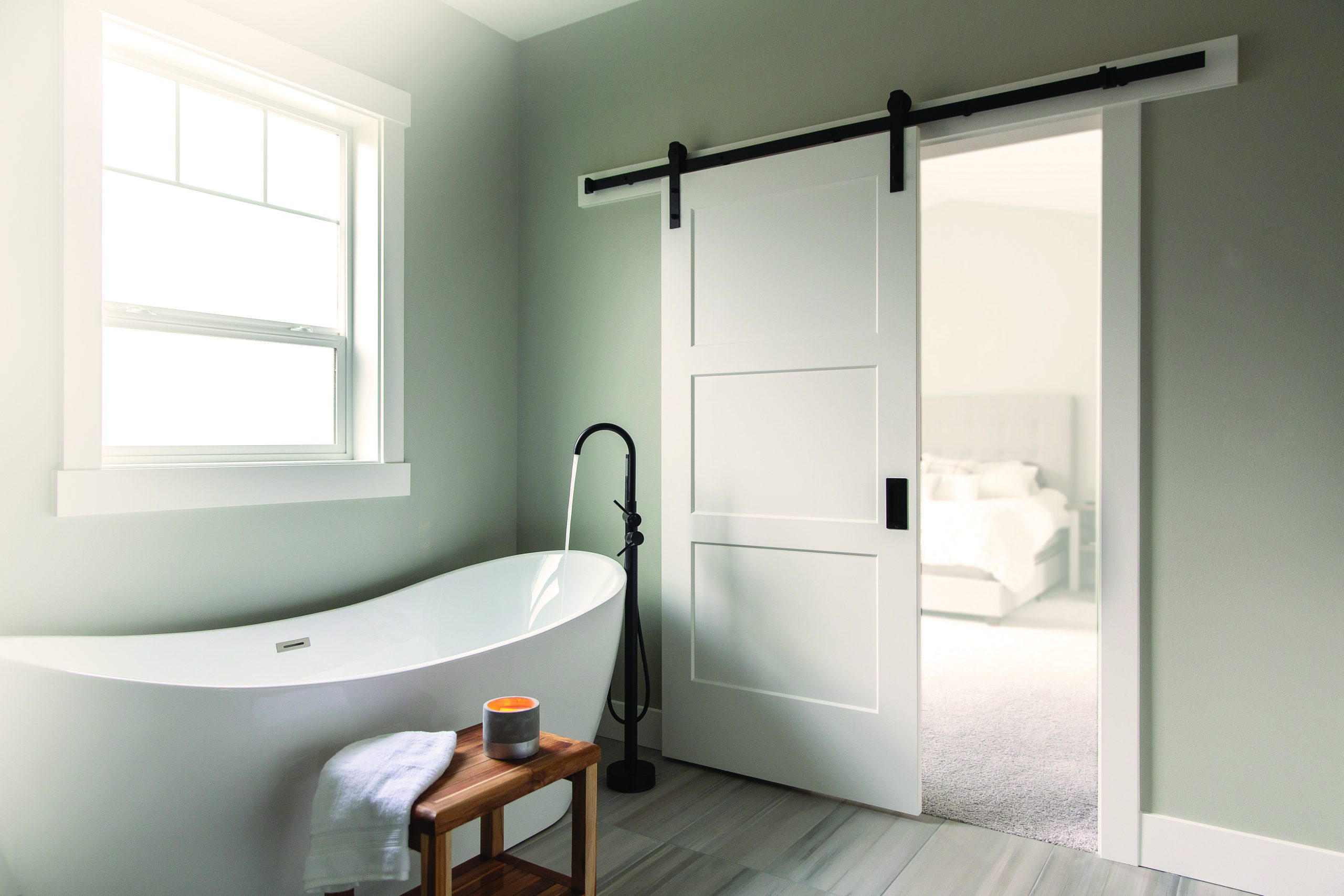
Photo courtesy of Alliance Door
In the Pocket: the Popularity Surge of Pocket Doors
Sonia Parodo, Director of Sales and Marketing at Concept SGA, says her company is seeing a clear shift away from the barn doors and bypass doors popular in recent years, with many builders and homeowners leaning toward pocket doors, especially in condos and highrise projects.
“For closets, instead of having a bypass door, they’ll opt for a pocket door that slides inside the wall,” she notes. “We also see the trend displacing barn doors, even in high rises; a lot of people don’t have the space to open a door.”
It’s just one way the right door choices can help people deal with the ever-shrinking spaces.
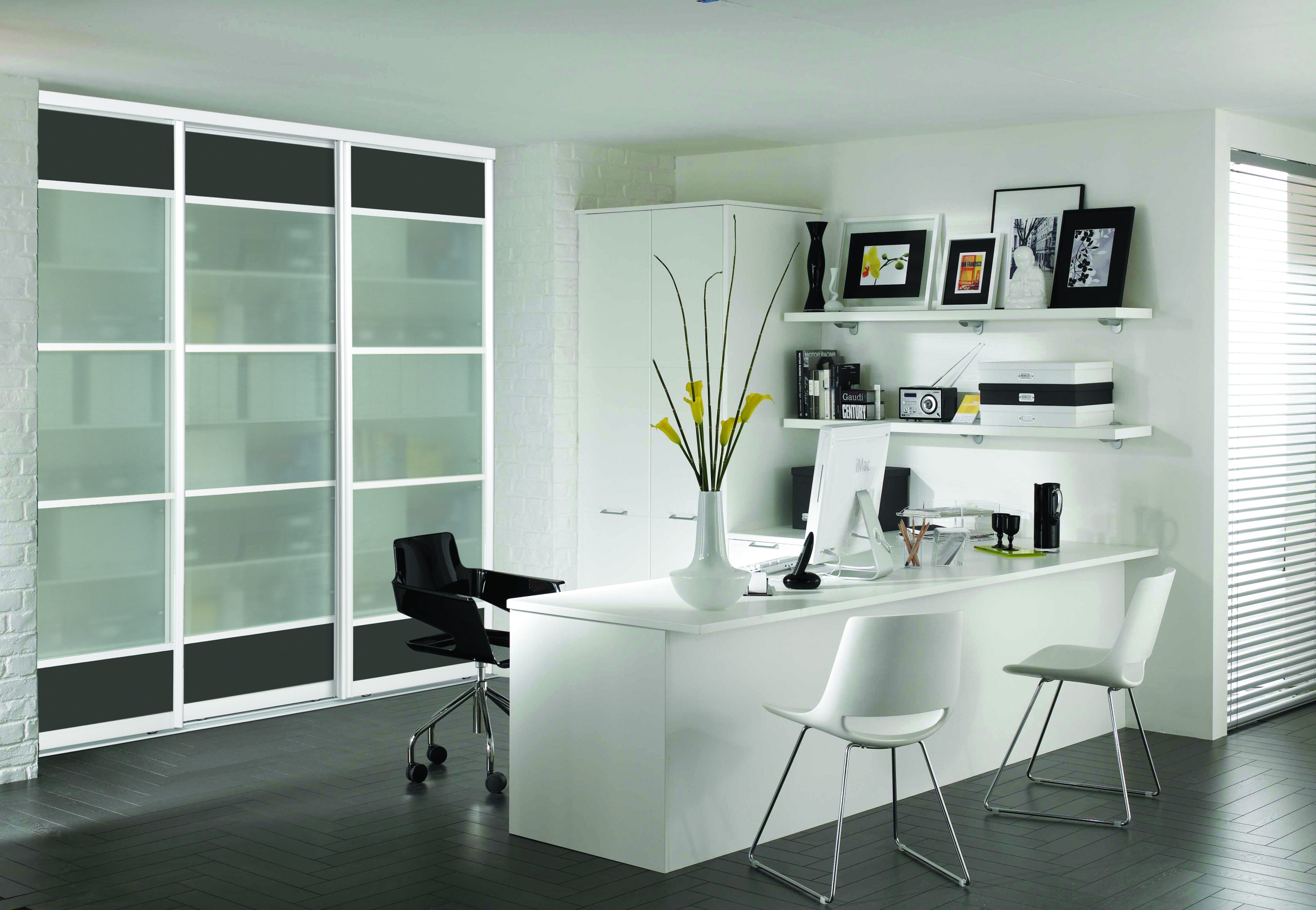
Photo courtesy of Concept SGA
Style Shifts: Warmth begins to Trump Contrast
As colours and tones go, sharp black and crisp white have long been safe bets in design. And while many of today’s homeowners are still keen on them, a move toward warmer tones and wood textures is beginning to replace the stark contrasts of recent years.
“The all-white, ultra-minimal aesthetic has largely plateaued, while richer colour palettes, mixed materials and more personalized interiors are gaining momentum,” Rocheleau says.
Meanwhile, in the closet space, Parodo says black frames are gaining traction over traditional white, with economics often playing a hand. “People that cannot afford to go with the better option, like an aluminum frame, will instead of staying with the cheaper version of the white frame, go with the black frame. So at least it makes it look more trendy, sleek.”
Contrast can also be created through hardware selection, Sabeski suggests, such as “having a grey floor with a grey door but really accenting it with a white door jamb and a white case flat panel casing with maybe a very bold-looking black lock.”
Pre-Finished for Ease, Duration and Cohesion
Consumers don’t want to paint, or wait while door fitters do, giving rise to demand for interior doors with durable, factory-finished colours. Durability is a major part of that appeal, with factory-finished surfaces resisting the scuffs, chips and everyday wear that site-painted doors often struggle with.
Sabeski notes that homeowners are often using prefinished doors to coordinate with the existing millwork and flooring, creating a cohesive look that helps tie rooms together.
“When we’re designing doors, we just don’t look at the door,” he says. “We look at the whole space, what are the trends in moldings, what are the trends of floor covering or laminate flooring? And we tie a lot of that in.”
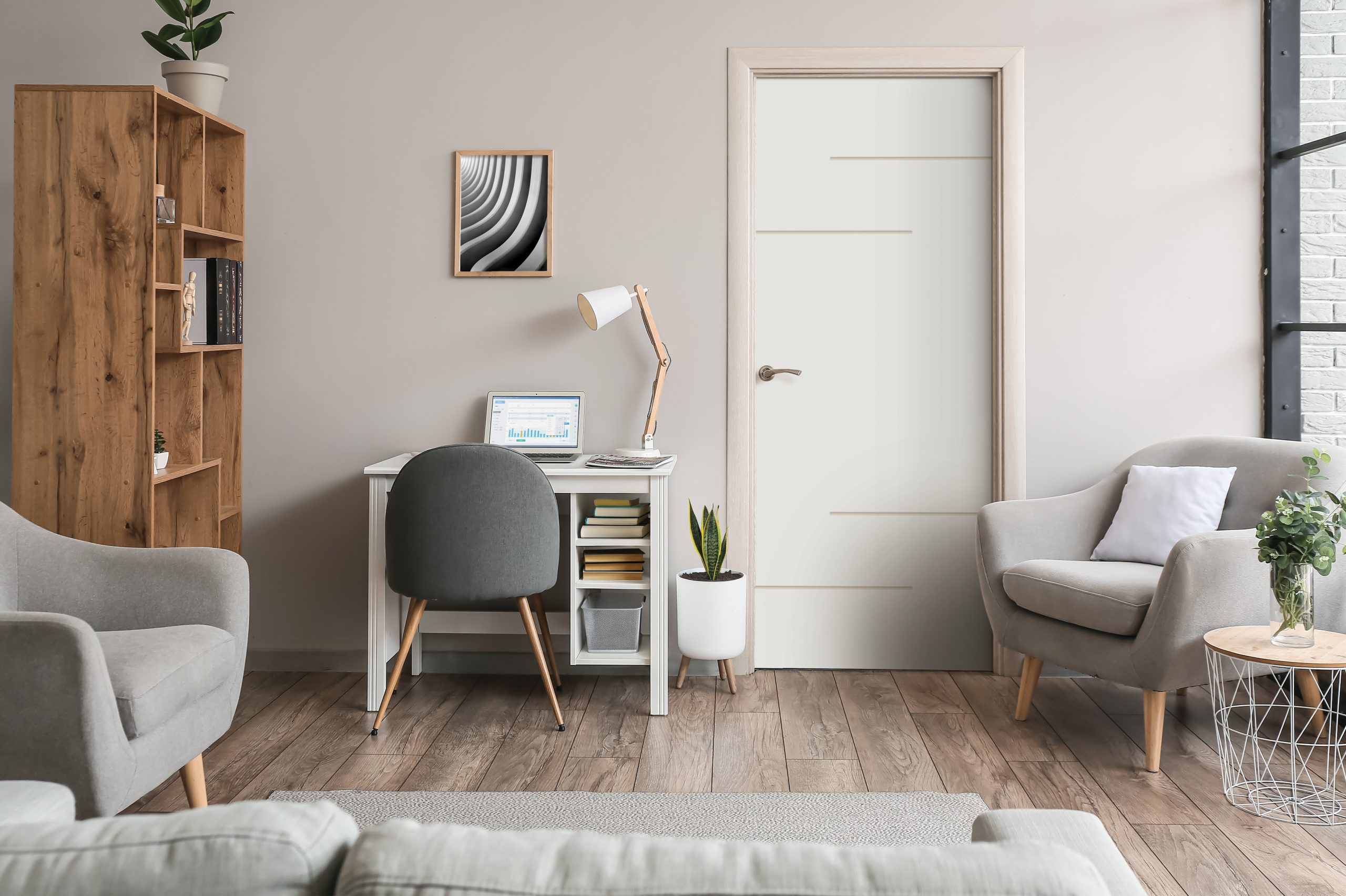
Photo courtesy of Alliance Door
Contemporary vs. Traditional Designs
Stylistically, more traditional and more contemporary door profiles are competing for attention, with different designs gaining ground in different regions and demographics. In the urban multi-family home, contemporary, grooved, fine-line profiles abound, while rural single-family homes often prefer traditional one-, three- and five-panel classic designs.
Sabeski notes that the split isn’t just aesthetic; it’s tied to how different markets build and renovate. Contemporary profiles dominate in new urban multifamily construction, while traditional designs remain strong in rural singlefamily builds and renovation work.
Region plays a part too. Rocheleau notes that Quebec and Atlantic Canada show a strong preference for onepanel shaker designs, while twopanel square remains the top choice nationally, as it did last year.
Market Realities: Polarization, Price Pressure and Purpose
Across Canada, practical considerations are having a major impact on the decisions contractors, builders and homeowners make when choosing interior and closet doors. Today’s DIY buyers often lean toward higher-quality closet systems, Parodo notes, while contractors are increasingly requesting dual quotes, one for entry-level metal frames and another for high-end aluminum, before their clients decide. The decision is becoming even more polarized, with fewer buyers seeking products in the middle ground. Price volatility is adding to the pressure and shortening quote windows.
With budgets, materials and expectations shifting quickly, the important thing for contractors to remember is functionality: doors serve a purpose. As Rocheleau notes, homeowners increasingly want doors that feel intentional within the broader architectural system, and this priority that now intersects directly with budget, materials and functional needs.
Every homeowner, and even every room, has its own needs around privacy, durability, style and value. In 2026, with smaller and louder multi-resident spaces used for living and working alike, that functionality may carry more weight than ever.
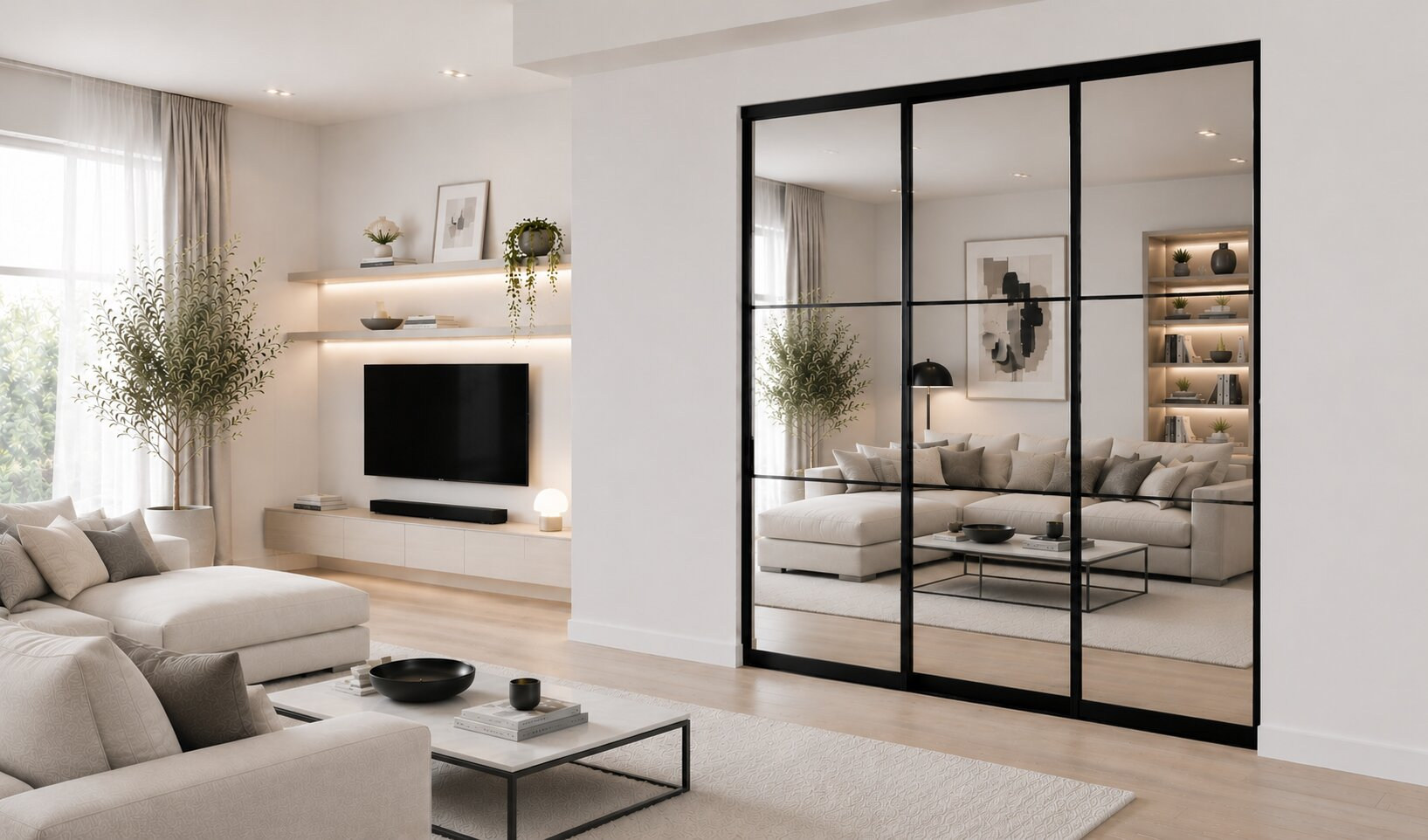
Photo courtesy of Concept SGA